

Table of Contents
- Why Your Dry Eye Hasn’t Improved
- What to Expect From Expert Dry Eye Treatment in San Antonio
- Meibomian Gland Dysfunction Treatment: When Drops Aren’t Enough
- How to Reduce Digital Eye Strain Before It Worsens Dryness
- Best Dry Eye Drops for Contact Lens Wearers
- Who Should Consider Expert Dry Eye Treatment in San Antonio
- Frequently Asked Questions
Last Updated: September 18, 2026
Why Your Dry Eye Hasn’t Improved
If you’ve been using artificial tears for months and your eyes still burn by mid-afternoon, the problem usually isn’t the drops. It’s the diagnosis. Expert dry eye treatment in San Antonio starts with a simple admission that most patients hear too late: dry eye is not one condition, and a single bottle of lubricant cannot address all of them.
At Clear Vision San Antonio, we see patients every week who have cycled through five or six over-the-counter products without relief. The reason is almost always the same. The tear film has three layers, and each can fail independently. When the oil layer is the problem, adding water makes things worse, not better.
That distinction matters because it changes everything about how you treat the condition. Below, we’ll walk through what an actual clinical workup looks like, why meibomian gland dysfunction is the most commonly missed cause, and who tends to benefit most from specialist care.
American Academy of Ophthalmology dry eye overview
What to Expect From Expert Dry Eye Treatment in San Antonio
Expert dry eye treatment begins with a diagnostic workup, not a prescription. A proper evaluation measures tear production, tear breakup time, and the health of the oil-producing glands along your eyelids.
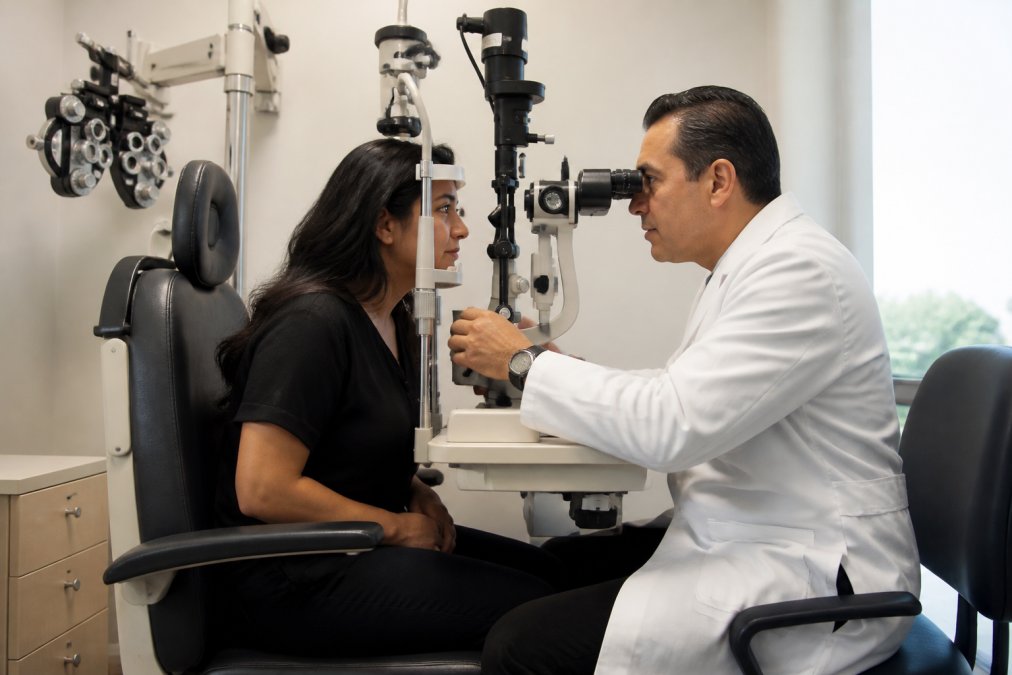
A typical visit includes:
- A symptom history covering screen time, medications, and environmental triggers
- Tear film assessment using dyes and a slit lamp
- Meibomian gland evaluation with gentle pressure on the eyelid margin
- Measurement of tear evaporation rate
- A review of systemic factors such as autoimmune conditions and prescription medications
The findings determine the treatment path. Some patients need anti-inflammatory therapy. Others need gland expression, punctal plugs, or a change in their contact lens routine. The point is that the plan follows the measurement, not the other way around.
Meibomian Gland Dysfunction Treatment: When Drops Aren’t Enough
Meibomian gland dysfunction treatment targets the oil glands in your eyelids, which is where most chronic dry eye actually originates. These glands secrete meibum, the lipid layer that slows tear evaporation. When they become blocked, tears evaporate faster no matter how much you lubricate.
A common mistake is treating this with warm compresses alone. Compresses help, but they rarely clear glands that have been blocked for months. In practice, clinical treatment options include:
- Thermal expression devices that liquefy and clear obstructed meibum
- Prescription anti-inflammatory drops for the eyelid margin
- Intense pulsed light therapy for select patients
- Daily lid hygiene and targeted omega-3 supplementation
- Oral antibiotics in specific inflammatory cases
The real difference between drugstore management and clinical care comes down to whether the glands are actually being treated or just the symptoms. If your eyelids feel crusted in the morning and your vision blurs then clears when you blink, that pattern points toward gland dysfunction rather than simple tear deficiency.
Using redness-relief drops daily can make dry eye worse over time. These products constrict blood vessels, and rebound redness follows when they wear off. If you’re using them more than a few days in a row, that’s a signal to get evaluated.
How to Reduce Digital Eye Strain Before It Worsens Dryness
Screen time is the most controllable driver of dry eye symptoms for most adults. The reason is straightforward: blink rate drops significantly during focused screen work, and incomplete blinks fail to spread the tear film across the eye.
To reduce digital eye strain, address the four factors that matter most: blink quality, screen position, lighting, and breaks.
- Follow the 20-20-20 rule: every 20 minutes, look at something 20 feet away for 20 seconds
- Position your screen slightly below eye level so your upper lid covers less of the eye
- Match screen brightness to your room, and reduce overhead glare
- Use a humidifier in dry indoor environments
- Make a conscious effort to blink fully, not partially
Patients often tell us they “already do the 20-20-20 rule” and still have symptoms. The missing piece is usually blink completeness. A partial blink doesn’t refresh the tear film, so the timer runs out regardless of how often you look away.
Best Dry Eye Drops for Contact Lens Wearers
The best dry eye drops for contact lens wearers are preservative-free lubricants labeled for lens compatibility, applied before insertion and again as needed during wear. Preserved drops can accumulate in the lens material and irritate the ocular surface over time.
What most guides miss is that lens material matters as much as the drop. Silicone hydrogel lenses generally transmit more oxygen than older hydrogel designs, but they can still dry out in low-humidity environments or during long screen sessions.
| Drop Type | Key Characteristic | Best For |
|---|---|---|
| Preservative-free lubricant | Single-use vials, no buildup | Daily lens wearers |
| Lipid-based emulsion | Restores oil layer | Evaporative dry eye |
| Gel-forming drop | Longer retention time | Evening and overnight use |
| Rewetting drop | Thin, quick comfort | Mid-day lens refresh |
A practical approach is to keep preservative-free vials at your desk and a gel-forming drop at home for the end of the day. If you still need rewetting drops more than four times daily, the underlying issue likely needs clinical treatment rather than a better bottle.
FDA guidance on contact lens care
Who Should Consider Expert Dry Eye Treatment in San Antonio
Expert care makes the most sense for patients whose symptoms persist despite consistent over-the-counter use, or whose dry eye interferes with reading, driving, or work. That group is larger than most people assume.
Consider a clinical evaluation if any of these apply to you:
- Symptoms lasting more than three months with no improvement
- A diagnosis of an autoimmune condition such as Sjögren’s syndrome or rheumatoid arthritis
- Diabetes or another condition requiring specialized eye health monitoring
- Contact lens intolerance that has developed over time
- Frequent use of redness-relief drops
- Morning eyelid crusting or a gritty sensation that never fully resolves
Patients who travel in from Eagle Pass or elsewhere in the region often ask whether the trip is worth it. The honest answer is that it depends on whether you’ve already tried the standard steps. If you’ve done the drops, the compresses, and the screen adjustments without results, a diagnostic workup is the logical next step, and it’s usually a single visit to get answers.
Bring a list of every medication you take, including antihistamines, antidepressants, and blood pressure drugs, to your first appointment. Many common prescriptions reduce tear production, and identifying one is sometimes the fastest route to relief.
Frequently Asked Questions
What are the most effective treatments for chronic dry eye?
Chronic dry eye often needs more than one approach. Depending on the cause, an eye doctor may recommend prescription drops, punctal plugs, intense pulsed light, or treatments that target the meibomian glands. For contact lens wearers, switching to preservative-free drops and adjusting lens habits can also help. A proper evaluation identifies which combination fits your eyes, so ask your eye doctor which options suit your case.
How do I know if I need to see a dry eye specialist?
If you have used over-the-counter drops for weeks without lasting relief, or if dryness affects reading, driving, or screen work, it is worth booking an evaluation. Signs like burning, fluctuating vision, or a gritty feeling that returns soon after drops can point to a deeper cause. Expert dry eye treatment in San Antonio starts with testing to find what is actually driving your symptoms.
Does insurance cover dry eye treatment procedures?
Coverage varies by plan and by procedure. Medically necessary visits and some prescription treatments may be covered, while certain in-office procedures are often considered elective. Check with your insurance provider before scheduling, and ask the clinic about billing and payment options. Clear Vision San Antonio can explain what your specific plan may cover during your appointment.
How does digital eye strain contribute to dry eye symptoms?
When you stare at a screen, your blink rate drops, so tears evaporate faster and the surface of your eye dries out. Over time this can trigger or worsen irritation, especially in people who already have meibomian gland dysfunction. Following the 20-20-20 rule, positioning screens below eye level, and using lubricating drops can reduce how much strain your eyes accumulate each day.