
Table of Contents
- What Is ICL Surgery and How Does It Work
- ICL vs LASIK: Key Differences in Vision Correction
- Who Makes a Good Candidate for ICL Surgery
- The Surgical Process: What Happens During ICL Implantation
- Implantable Collamer Lens Recovery Time and Post-Operative Care
- Benefits of ICL for Long-Term Vision Freedom
- Risks, Side Effects, and What to Expect
- Financial Planning and Insurance Considerations
- Frequently Asked Questions
Last Updated: September 19, 2026
What Is ICL Surgery and How Does It Work
ICL surgery, formally known as implantable collamer lens implantation, is a refractive procedure that corrects vision by placing a biocompatible lens inside the eye. Unlike LASIK, which reshapes the cornea, ICL works by inserting a thin, prescription-corrected lens between the cornea and the eye’s natural lens. This approach preserves corneal tissue and offers visual freedom for patients with moderate to high refractive errors.
The implantable collamer lens itself is made from a biocompatible material designed to integrate seamlessly with eye tissue. The lens sits in the eye’s ciliary sulcus, a naturally occurring space behind the iris. Because the lens remains in place permanently, it provides stable vision correction without the ongoing maintenance required by glasses or contact lenses.
What makes ICL fundamentally different is its reversibility. If your vision changes significantly over time or if complications arise, the lens can be removed or replaced. This flexibility appeals to patients hesitant about permanent corneal procedures. The procedure takes roughly 20-30 minutes per eye, and most patients report improved vision within days, with full stabilization occurring over several weeks.
The biocompatibility of the collamer material means your eye’s natural tissues accept the lens without rejection. This material has been used successfully in ophthalmic procedures for decades, giving it a strong track record in clinical settings. At Clear Vision San Antonio, we offer expert ophthalmological care, combining advanced medical technology with a commitment to personalized patient attention.
ICL vs LASIK: Key Differences in Vision Correction
The choice between ICL and LASIK hinges on corneal thickness, refractive error magnitude, and long-term vision stability goals. LASIK reshapes the cornea using an excimer laser to correct myopia, astigmatism, and presbyopia, while ICL correction happens through lens implantation, leaving corneal tissue untouched.
For patients with thin corneas or very high refractive errors, ICL often becomes the better option. LASIK requires sufficient corneal tissue to safely remove; ICL bypasses this limitation entirely. If you’ve been told your corneas are too thin for LASIK, ICL may restore your candidacy for surgical vision correction.
LASIK offers faster visual recovery, many patients see clearly within 24 hours. ICL typically requires a longer stabilization period, though vision improvement begins within days. The trade-off is that LASIK is permanent (the cornea cannot be reshaped again), whereas ICL remains removable and adjustable if your prescription changes.
Night vision considerations differ between the two procedures. Some LASIK patients report halos or glare, particularly in dim lighting, because corneal reshaping can affect how light enters the eye. ICL surgery generally produces fewer night vision disturbances because the implantable lens maintains the eye’s natural optical properties more closely. This matters if you drive frequently at night or work in low-light environments.
Cost and insurance coverage vary. Both procedures are considered elective, so coverage depends on your specific plan.
Who Makes a Good Candidate for ICL Surgery
Ideal ICL candidates are adults aged 21 and older with stable vision prescriptions for at least 12 months. Your refractive error must fall within the lens’s correction range, typically myopia up to -20 diopters and astigmatism up to -6 diopters, though individual lenses vary.
Corneal thickness is less critical for ICL than for LASIK, making it suitable for patients with thinner corneas who cannot safely undergo corneal reshaping. If previous eye surgery or injury has compromised your cornea, ICL may still be an option.
Patient candidacy also depends on overall eye health. You should have no active eye infections, severe dry eye syndrome, or uncontrolled glaucoma. Certain conditions like keratoconus (progressive corneal thinning) may disqualify you from both procedures. A comprehensive eye examination at Clear Vision San Antonio can determine whether ICL is right for your specific situation.
Age matters in a practical sense. Presbyopia, the age-related difficulty focusing on near objects, typically emerges after age 40. If you’re already experiencing presbyopia, ICL can be combined with monovision correction (one eye optimized for distance, one for near vision) or paired with reading glasses for optimal visual freedom at all distances.
Lifestyle factors influence candidacy too. If you participate in contact sports with high impact risk, ICL’s internal positioning offers protection that surface-based procedures cannot match. Athletes and active individuals often find ICL appealing because the lens cannot be dislodged by physical contact.
The Surgical Process: What Happens During ICL Implantation
ICL implantation begins with detailed preoperative imaging to measure your eye’s internal dimensions and determine the correct lens size and power. Your ophthalmologist uses optical biometry and anterior segment analysis to ensure precise lens selection. This planning phase is critical, accurate measurements directly impact your post-operative visual outcomes.
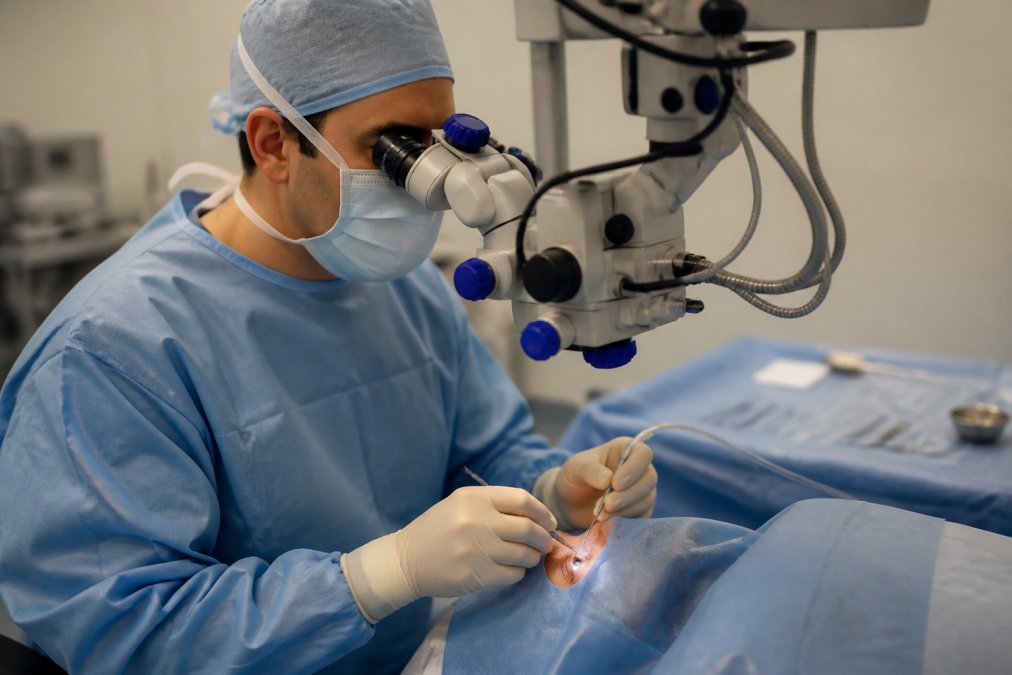
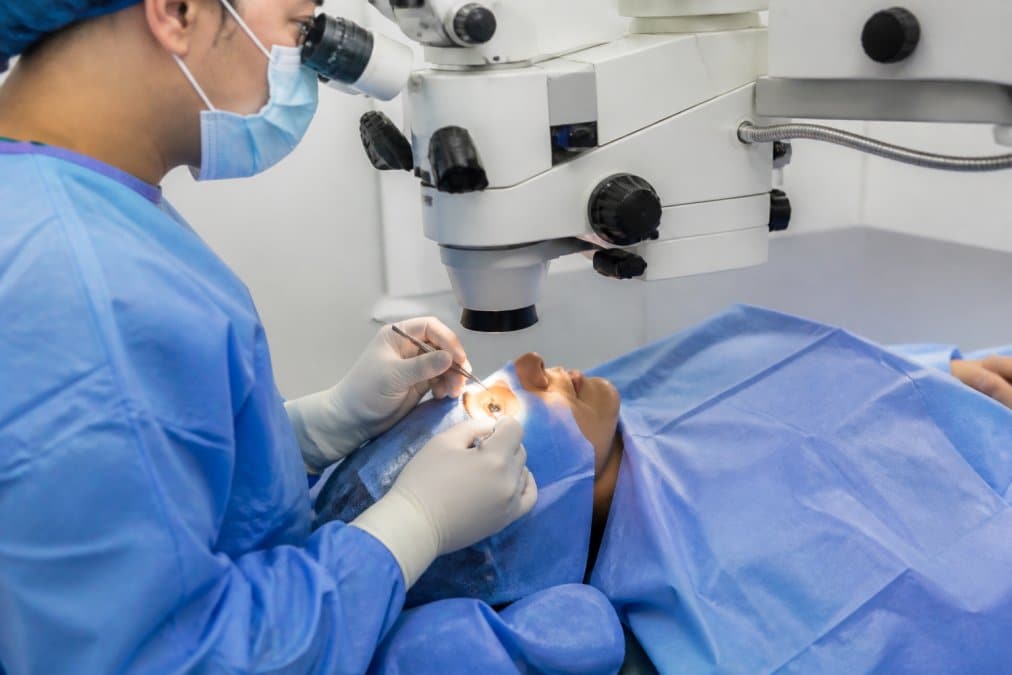
On surgery day, you’ll receive topical anesthesia (numbing drops) so you feel pressure but no pain. A small incision, typically 3-4 millimeters, is created at the eye’s edge. The surgeon uses a specialized injector to fold the implantable collamer lens and insert it through this tiny opening. Once inside, the lens unfolds naturally and positions itself in the ciliary sulcus behind the iris.
The entire procedure takes 20-30 minutes per eye. Your surgeon may operate on both eyes the same day or space them a few days apart, depending on your preference and clinical judgment. Throughout the surgery, you’ll see light and movement but won’t experience sharp pain, the anesthesia prevents that.
After lens placement, the surgeon may use a small instrument to position the lens perfectly. Some surgeons create a small opening in the iris (peripheral iridotomy) to improve fluid flow inside the eye and reduce pressure. This preventive step is routine in many practices and takes only seconds.
The incision is so small it typically doesn’t require stitches. Your eye will be patched temporarily, and you’ll be given antibiotic and anti-inflammatory drops to begin immediately. Recovery begins the moment you leave the surgical suite.
Implantable Collamer Lens Recovery Time and Post-Operative Care
Most patients experience rapid vision improvement within the first few days after ICL implantation. Your vision may be slightly blurry or fluctuate initially, this is normal as your eye adjusts to the new lens. Full visual stabilization typically occurs within 4-6 weeks, though some patients achieve their final vision prescription within 2-3 weeks. (Source: statistics on refractive errors)
Post-operative care is straightforward but essential. You’ll use prescribed antibiotic drops for one week and anti-inflammatory drops for 2-4 weeks, depending on your surgeon’s protocol. These medications prevent infection and reduce inflammation as your eye heals. You must instill drops exactly as directed, consistency matters for optimal healing.
Activity restrictions apply for the first week. Avoid swimming, hot tubs, and strenuous exercise for 7-10 days. Your eye is healing internally, and exposing it to water or excessive heat can compromise that process. Light activities like walking and reading are fine immediately. After one week, most patients can resume normal activities, though your surgeon may recommend waiting 2-3 weeks before high-impact sports.
Follow-up appointments are mandatory. You’ll see your ophthalmologist the day after surgery, one week post-op, one month post-op, and again at three months. These visits monitor for complications, verify lens positioning, and confirm that your visual acuity matches expectations.
Dry eye symptoms sometimes occur temporarily after ICL surgery. Your eyes may feel slightly dry or irritated for a few weeks. Lubricating drops provide relief, and the dryness typically resolves as healing completes.
Benefits of ICL for Long-Term Vision Freedom
The primary benefit of ICL is visual freedom, the ability to see clearly at distance, intermediate, and near ranges without glasses or contact lenses. For patients who’ve worn corrective lenses for decades, this represents a significant quality-of-life improvement. You wake up seeing clearly, swim without worrying about losing contacts, and enjoy spontaneous activities without vision aids.
Risks, Side Effects, and What to Expect
Like all surgical procedures, ICL implantation carries potential risks. The most serious is endothelial cell loss, damage to the innermost layer of corneal cells that regulate fluid balance. If too many cells are lost, corneal swelling (corneal edema) can develop, causing blurred vision. Modern surgical techniques and lens designs have minimized this risk significantly, but it remains a consideration for patients with pre-existing endothelial cell concerns.
Financial Planning and Insurance Considerations
ICL surgery is considered an elective procedure, meaning most insurance plans do not cover it. Medicare and private health insurance typically classify vision correction as cosmetic rather than medically necessary, even when it significantly improves quality of life. This means you’ll likely pay out-of-pocket for the procedure.
Frequently Asked Questions
Is ICL surgery better than LASIK surgery?
Neither is universally better, it depends on your eyes and lifestyle. ICL works well for people with thin corneas, high prescriptions, or dry eyes, since it doesn’t reshape corneal tissue. LASIK suits those with thicker corneas and moderate prescriptions. Both correct myopia and astigmatism effectively. Your ophthalmologist can determine which refractive surgery matches your candidacy after examining your corneal thickness and visual needs.
What is the recovery process like after ICL surgery?
Most patients experience rapid visual improvement within days, though complete stabilization takes 2-4 weeks. You’ll need antibiotic and anti-inflammatory drops for the first month. Avoid strenuous activity and water exposure for one week. Follow-up appointments are part of the post-operative care. Full recovery and optimal visual acuity typically occur within 4-6 weeks, after which you can return to normal activities and sports.
What makes ICL different from other vision correction options?
Unlike LASIK, which reshapes your cornea, an ICL is an implantable lens placed inside your eye between the cornea and retina. This approach preserves corneal tissue, making it ideal for patients with thin corneas or high refractive errors. The biocompatible Collamer material integrates well with eye tissue. ICL also offers reversibility, the lens can be removed if needed, and provides excellent depth of focus and night vision quality compared to some alternatives.
How long does an ICL implant last?
ICL implants are designed to be permanent and typically last a lifetime with proper care. The biocompatible material resists degradation, and long-term studies show excellent stability over decades. However, your eyes may change due to presbyopia (age-related focusing difficulty) or other age-related conditions like cataracts, which may require separate treatment. Regular follow-up care with your ophthalmologist ensures your lens remains healthy and your vision stays optimal.
If you’re considering vision correction and want to explore whether ICL is right for your eyes, Clear Vision San Antonio offers expert evaluation and advanced surgical technology. Our ophthalmologists have extensive experience with implantable collamer lens procedures and provide personalized attention throughout your journey to clear vision. Request an appointment with Clear Vision San Antonio today to discuss your vision correction options and take the first step toward visual freedom.