
Table of Contents
- Why Patients Seek LASIK Alternatives in San Antonio
- ICL Surgery San Antonio: Implantable Collamer Lens Explained
- PRK vs LASIK Recovery Time: What to Expect
- Refractive Lens Exchange Benefits for Patients Over 40
- SMILE: A Minimally Invasive Alternative
- Cost Comparison and Insurance Coverage for LASIK Alternatives
- How to Choose the Right LASIK Alternative in San Antonio
- Frequently Asked Questions
Last Updated: September 17, 2026
Why Patients Seek LASIK Alternatives in San Antonio
Not everyone who wants to reduce their dependence on glasses is a candidate for laser-assisted in situ keratomileusis. At Clear Vision San Antonio, we evaluate patients who want to understand the full range of LASIK alternatives before committing to a procedure.
The reasons patients explore other options vary. Some have thin corneas that make creating a corneal flap risky. Others have high prescriptions, chronic dry eye syndrome, or age-related changes like presbyopia that LASIK does not address.
The good news: several proven refractive surgery options can correct vision without the standard LASIK approach. Below, we compare the main alternatives, their candidacy requirements, recovery timelines, and cost structures so you can make an informed decision.
A common mistake is assuming LASIK is the only path to clear vision. In practice, the right procedure depends on your corneal thickness, prescription, age, and eye health history.
ICL Surgery San Antonio: Implantable Collamer Lens Explained
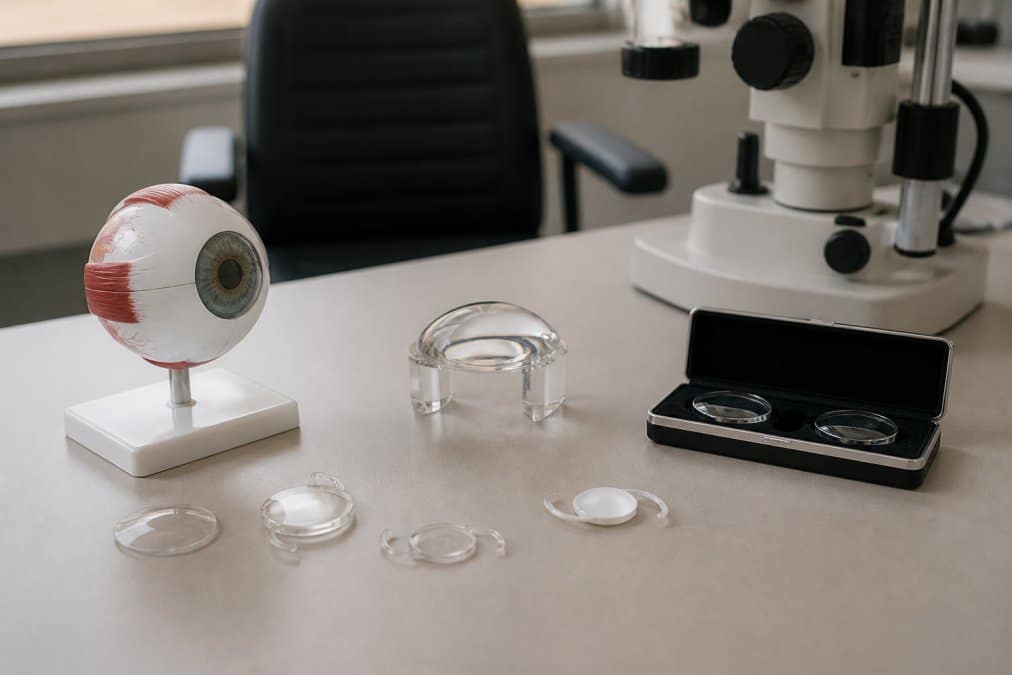
ICL surgery is a refractive procedure that places a biocompatible lens between the iris and your natural crystalline lens (Implantable Collamer Lens (ICL)). Unlike LASIK, it does not remove corneal tissue, which is why it is frequently recommended for patients whose corneas are too thin for laser ablation.
The implantable collamer lens (ICL) is a small, flexible lens made from a collagen-based material called collamer. It corrects myopia and astigmatism while preserving your cornea’s natural structure. The procedure is removable and reversible.
How the ICL Procedure Works
The procedure is typically performed one eye at a time, with a short interval between eyes. Your surgeon creates a tiny incision, injects the folded lens behind the iris, and positions it in front of your natural lens. No stitches are usually required.
Who Is a Good Candidate for ICL?
Good candidates for ICL typically have thin corneas, high prescriptions, or dry eye syndrome that makes laser surgery less suitable. Your ophthalmologist will confirm candidacy through a comprehensive eye exam measuring corneal thickness and visual acuity.
A common pattern in candidacy screening is that ICL is considered when:
- Corneal thickness is below the threshold your surgeon considers safe for a laser flap.
- The prescription is high enough that laser ablation would remove too much tissue.
- Dry eye symptoms are significant enough that a corneal procedure could worsen them.
- The patient is within the approved age range and has a stable prescription.
ICL vs. LASIK: Key Differences
| Factor | ICL | LASIK |
|---|---|---|
| Corneal tissue | Preserved | Removed |
| Reversible | Yes | No |
| Best for | Thin corneas, high prescriptions | Normal corneas, moderate prescriptions |
| Dry eye impact | Generally lower | Can worsen dry eye |
If you have been told you are not a LASIK candidate because of thin corneas or a high prescription, ICL is often the first alternative an ophthalmologist will evaluate.
Risks and Considerations
As with any internal eye procedure, ICL carries risks including infection, increased eye pressure, and the possibility of needing a follow-up procedure. Because the lens sits inside the eye, regular monitoring by your surgeon is part of the long-term plan. When candidacy criteria are met, ICL can deliver predictable visual outcomes, but the screening exam is what determines whether it is the right fit for you.
PRK vs LASIK Recovery Time: What to Expect
PRK (photorefractive keratectomy) reshapes the cornea’s surface rather than creating a flap. Recovery takes longer than LASIK, but it avoids flap-related complications.
PRK Recovery Timeline
- Days 1-3: Significant discomfort and blurry vision are common; rest is essential.
- Week 1: Vision improves but may fluctuate; most patients return to desk work.
- Weeks 2-4: Visual acuity stabilizes for many patients.
- Months 1-3: Full vision stability typically achieved.
PRK’s longer recovery is often the trade-off for better long-term corneal stability, especially for patients in active contact sports or physically demanding jobs.
Refractive Lens Exchange Benefits for Patients Over 40
Refractive lens exchange (RLE) replaces your eye’s natural lens with an intraocular lens (IOL). For patients over 40, the primary refractive lens exchange benefits include correcting presbyopia and eliminating future cataract risk.
RLE uses the same surgical technique as modern cataract surgery. Premium IOLs can address near, far, and intermediate vision simultaneously. This makes RLE a strong option for patients who are not candidates for corneal-based laser surgery.
For patients over 40, RLE can deliver better outcomes because it addresses presbyopia directly rather than leaving it untreated.
SMILE: A Minimally Invasive Alternative
SMILE (Small Incision Lenticule Extraction) uses a femtosecond laser to create a small disc of tissue removed through a keyhole incision. It maintains greater corneal structural integrity than LASIK.
The procedure is currently limited to treating nearsightedness and astigmatism.
| Procedure | Best For | Key Advantage | Main Limitation |
|---|---|---|---|
| ICL | Thin corneas, high prescriptions | Reversible, preserves cornea | Invasive internal procedure |
| PRK | Active lifestyles, thin corneas | No corneal flap | Longer recovery |
| RLE | Patients over 40, presbyopia | Eliminates cataract risk | Higher surgical risk profile |
| SMILE | Nearsightedness, dry eye concerns | Minimally invasive | Limited prescription range |
Cost Comparison and Insurance Coverage for LASIK Alternatives
Pricing for refractive procedures varies by provider, technology, and your specific prescription. Most vision correction surgeries are considered elective, so insurance coverage is often limited.
How the Alternatives Compare on Cost Structure
Rather than quoting a single national number, it helps to understand what drives cost for each option:
| Procedure | What Drives the Price | Typical Coverage Reality |
|---|---|---|
| PRK | Surgeon fee, laser technology, follow-up visits | Elective; rarely covered by medical insurance |
| ICL | Lens cost, surgical facility fee, per-eye pricing | Elective; rarely covered |
| RLE | IOL type (standard vs. premium), facility fee | May be partially covered if cataract is present |
| SMILE | Laser platform, surgeon experience | Elective; rarely covered |
Insurance, HSA, and FSA: What Actually Applies
- Vision insurance typically covers exams, glasses, and contacts, not refractive surgery.
- Medical insurance may cover a procedure when it is medically necessary, such as cataract surgery with a standard IOL. Refractive lens exchange performed for vision correction alone usually falls outside standard coverage.
- HSA and FSA accounts can often be used for qualified vision correction expenses, which effectively lowers the after-tax cost. Check your plan documents, since rules vary.
- Medicare generally covers cataract surgery when medically necessary but not elective refractive procedures.
According to the American Academy of Ophthalmology’s patient resources, patients should discuss financing options and expected out-of-pocket costs during their consultation.
Financing Options to Ask About
Before comparing quotes, confirm what each price includes, pre-op exams, the procedure itself, post-op visits, and any enhancement policy. A lower headline price that excludes follow-up care is not a lower total cost.
Clear Vision San Antonio provides consultations so you understand costs before committing.
How to Choose the Right LASIK Alternative in San Antonio
Choosing among lasik alternatives comes down to four factors: your corneal thickness, prescription, age, and eye health history. A comprehensive eye exam with an experienced ophthalmologist is the only way to determine which procedure fits you.
Ask these questions at your consultation:
- Does my corneal thickness rule out LASIK?
- Do I have dry eye syndrome that affects candidacy?
- Am I over 40 and showing signs of presbyopia?
- What is my expected recovery period?
- What are the typical patient outcomes for my prescription?
Do not choose a procedure based on price alone. A procedure that does not match your corneal thickness or prescription can lead to poor visual outcomes.
Frequently Asked Questions
What are the most common alternatives to LASIK surgery?
The most common LASIK alternatives are PRK (photorefractive keratectomy), ICL (implantable collamer lens), refractive lens exchange (RLE), and SMILE (small incision lenticule extraction). Each procedure addresses different vision issues and candidacy requirements. PRK suits thin corneas, ICL works for high prescriptions, RLE helps patients over 40 with presbyopia, and SMILE is minimally invasive for nearsightedness.
Is ICL surgery better than LASIK for high prescriptions?
ICL surgery is often recommended for patients with high myopia or thin corneas who are not good LASIK candidates. Unlike LASIK, ICL does not remove corneal tissue, making it a reversible option. It can correct a wider range of prescriptions and may provide better visual quality for some patients. A comprehensive eye exam with an ophthalmologist determines the best choice.
Who is a good candidate for PRK instead of LASIK?
PRK is a good option for patients with thin corneas, dry eye syndrome, or those who engage in contact sports or have physically demanding jobs. Since PRK does not create a corneal flap, it preserves more corneal structure. Recovery time is longer than LASIK, but results are comparable. An eye doctor can assess your corneal thickness and overall eye health.
What are the risks associated with refractive lens exchange?
Refractive lens exchange (RLE) is an intraocular procedure, so it carries risks similar to cataract surgery, including infection, inflammation, retinal detachment, and increased eye pressure. However, it also prevents future cataracts. Most patients experience significant vision improvement. Discussing your medical history and having a thorough eye exam helps minimize risks.
Are vision correction procedures covered by insurance in Texas?
Most insurance plans in Texas do not cover elective vision correction procedures like LASIK, PRK, or ICL because they are considered cosmetic. However, some plans may offer partial coverage or flexible spending account (FSA) eligibility. Refractive lens exchange may be covered if it is medically necessary for cataract treatment. Check with your insurance provider and the eye care center for specific coverage details.
Finding the right vision correction procedure requires more than a quick online search. Clear Vision San Antonio offers personalized evaluations, advanced technology lens implants, and a team of expert eye doctors who match each patient to the procedure that fits their eyes. Request an appointment with Clear Vision San Antonio to discuss whether ICL, PRK, RLE, SMILE, or another option is right for you.