
Table of Contents
- Why Swelling Happens After Eye Surgery
- Cold Compresses: How to Reduce Swelling Fast
- Eyelid Surgery Recovery Timeline: What to Expect Week by Week
- How to Sleep After Blepharoplasty for Less Swelling
- When to Worry About Swelling After Eye Surgery
- Diet, Hydration, and Supplements That Support Healing
- Activity, Rest, and Psychological Patience During Recovery
- Conclusion
- Frequently Asked Questions
Last Updated: September 11, 2026
Why Swelling Happens After Eye Surgery
Swelling after eye surgery is the body’s normal inflammatory response to tissue trauma, and understanding it is the first step in knowing how to reduce swelling after eye surgery. Some puffiness is expected, it peaks early, and it fades on a predictable schedule.
Here’s what’s happening beneath the surface. Surgical instruments create microscopic trauma in the periorbital area, the tissue around the eye. In response, your vascular system sends fluid and immune cells to the incision site to begin repair. That fluid accumulation is what you see as bruising and edema.
The eyelid skin is the thinnest in the body, which is why even minor swelling looks dramatic there. It doesn’t mean something went wrong.
The practical takeaway: your job during recovery is not to stop this process, but to support it. Cold therapy, head elevation, and rest work with your body’s healing process rather than against it.
Cold Compresses: How to Reduce Swelling Fast
Cold therapy is the fastest, most reliable method to reduce swelling in the first 48 hours after surgery (peer-reviewed research). Cold constricts blood vessels, which slows fluid leaking into surrounding tissue and limits the inflammatory cascade that produces puffiness and bruising.
The technique matters more than the tool. An ice pack straight from the freezer can damage numb, healing skin. Always wrap it in a thin cloth barrier first, and never press down on the incision line.

Choosing the Right Cold Tool
Not all cold tools behave the same on eyelid skin, which is the thinnest in the body. A few practical trade-offs:
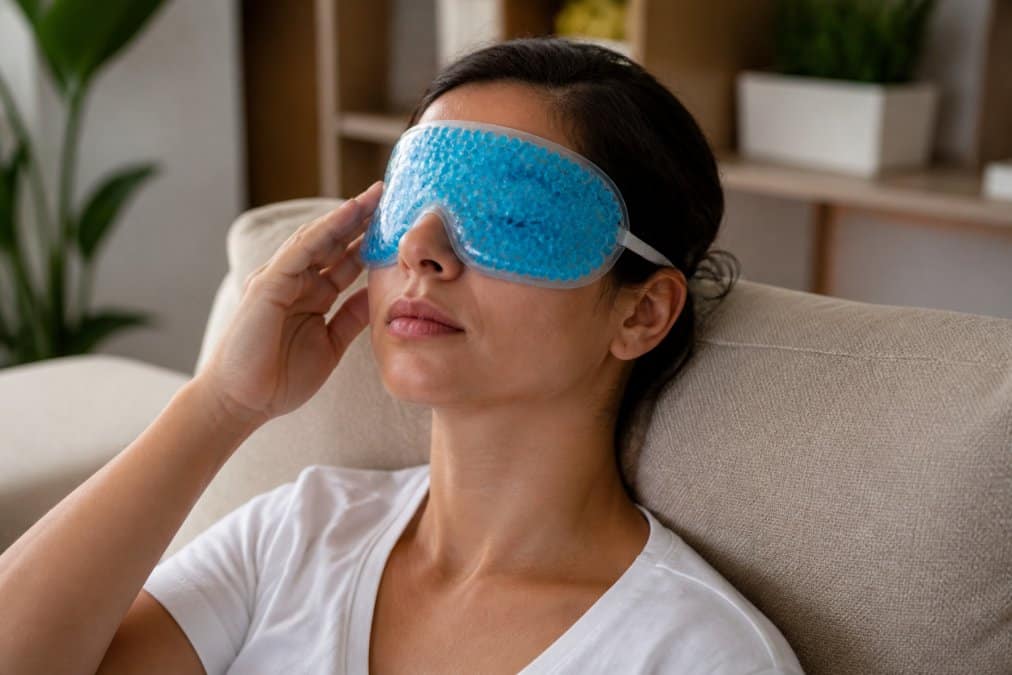
- Gel bead packs mold to the brow and cheekbone and stay cold for roughly 15 to 20 minutes, which matches the ideal session length. Look for ones labeled freezer-safe and non-toxic.
- Reusable gel masks shaped for the eyes are convenient but can feel heavy. Choose a lightweight version and check that the strap doesn’t pull on the incision.
- Frozen peas or corn in a sealed bag conform well and are a common household substitute. They warm up faster than gel, so expect shorter useful sessions.
- Chilled spoons or cool washcloths are the gentlest option for the first 24 hours when skin is most sensitive, though they lose cold quickly.
- Cooling gel patches marketed for puffiness are fine as a comfort measure, but they don’t deliver the sustained cold that true post-op swelling control needs.
Whichever you pick, the barrier rule never changes: one thin, clean cloth between the cold source and your skin.
Step-by-Step Cold Compress Routine
- Prepare your compress. Use a gel pack, a bag of frozen peas, or a cold washcloth, wrapped in a clean thin cloth.
- Position yourself upright. Sit or recline at a 45-degree angle so fluid drains away from the eyes.
- Apply gently. Rest the compress over closed eyes without pressing on the incision site.
- Time it correctly. Keep it on for 15 to 20 minutes, then remove it for at least 20 minutes (medlineplus.gov).
- Repeat through the day. Aim for several cycles during waking hours for the first two days.
- Stop when instructed. Your surgeon will tell you when to switch from cold to other methods.
Never apply ice directly to the skin or leave a compress on for extended periods. Numb post-surgical skin can’t signal damage, and prolonged cold exposure can injure tissue. Set a timer for every session.
Cold vs. Warm: When to Switch
A common mistake is continuing cold therapy too long. Cold is for the first 48 to 72 hours, when the goal is to constrict vessels and limit swelling (peer-reviewed research). After that window, many surgeons allow a switch to gentle warmth, which can help move stagnant fluid and ease stiffness. Don’t guess, your post-op instructions will specify the switch point for your procedure, and switching early can prolong bruising.
Keep two gel packs in rotation. While one is on your eyes, the other re-chills, so you’re never tempted to extend a session past the 20-minute mark because the pack has gone warm.
Making It Comfortable
Cold therapy works best when you’ll actually do it. Set up a station before surgery: your compress in the freezer, a thin cloth within reach, a timer, and something to listen to. Patients who build the routine into a recliner or bed setup with everything nearby tend to complete far more cycles in the critical first two days than those who have to gather supplies each time.
Eyelid Surgery Recovery Timeline: What to Expect Week by Week
The eyelid surgery recovery timeline follows a consistent arc for most patients, though individual healing varies. Knowing what’s normal at each stage reduces anxiety and helps you spot real problems early.
Most patients move through recovery in four broad phases:
| Phase | Timeframe | What You’ll Notice |
|---|---|---|
| Peak swelling | First 48-72 hours | Maximum puffiness and bruising |
| Early fading | Days 4-7 | Bruising shifts to yellow-green, swelling drops |
| Visible improvement | Weeks 2-3 | Most swelling gone, incisions healing |
| Final result | Weeks 6-12 | Residual puffiness resolves, final contour appears |
Bruising typically fades faster than swelling. Discoloration may clear within a week or two, while subtle puffiness can linger for several weeks. That gap surprises people, and it’s a common source of worry.
Your post-surgical instructions from your surgeon will set the specific expectations for your procedure. Follow them over any general timeline you read online.
How to Sleep After Blepharoplasty for Less Swelling
Sleeping with your head elevated is one of the most effective things you can do to limit overnight swelling. When you lie flat, fluid pools around the eyes. Elevation lets gravity drain it away, and the hours you spend asleep are the longest stretch your body has to either accumulate or clear that fluid.
Here’s how to sleep after blepharoplasty without wrecking your rest:
- Use a wedge pillow or stack two to three pillows to raise your head 30 to 45 degrees.
- Sleep on your back. Side and stomach sleeping presses fluid into the periorbital area and can irritate incisions.
- Keep the elevation up for the first week, or as long as your surgeon advises.
- Set up before surgery. Arrange your pillows and a nearby water glass so you aren’t scrambling the first night.
Sleeping Position Hacks That Actually Work
“Keep your head elevated” is easy to say and hard to do for seven nights. These setups make it sustainable:
- Wedge pillow plus a standard pillow. A foam wedge creates a stable 30-degree base; a regular pillow on top fine-tunes the angle and supports your neck so you don’t wake with a crick.
- Recliner sleeping. An adjustable recliner holds the angle all night without shifting, and it keeps you from rolling onto your side. Many patients find this the single easiest fix for the first week.
- Travel neck pillow. Worn around the neck, it physically blocks you from turning onto your side or stomach, a small trick that makes a real difference for people who normally sleep face-down.
- Body pillow along your side. If you’re a side sleeper, a body pillow behind your back trains you to stay supine and gives you something to lean into.
- Firm mattress topper or folded blanket under the wedge. A soft mattress lets the wedge sink and flatten overnight, quietly undoing your elevation by 3 a.m.
What to Avoid at Night
- Don’t sleep flat “just for a few hours.” Even a short flat stretch can undo a day of good elevation.
- Don’t stack pillows into a tower. A tall, unstable stack collapses and puts your neck at an awkward angle. A single wedge is more reliable than five pillows.
- Don’t sleep with a cold compress on. Cold therapy is a waking-hours routine with timed sessions. Leaving one on overnight risks tissue injury on numb skin.
- Don’t sleep face-down on a travel pillow. The cutout may feel protective, but it still presses fluid and pressure toward the eyes.
Set Up Before Surgery
Arrange your sleep station a day or two ahead: wedge in place, neck pillow ready, phone charger within reach, and a glass of water on the nightstand. The first night after surgery is when you’re least able to improvise, and a pre-built setup means you go straight from the car to a correctly angled bed.
Take a photo of your setup in daylight before surgery. If you wake up flat and confused at 2 a.m., the photo reminds you how the wedge and pillows are supposed to fit together.
Sleep hygiene matters here too. Quality rest supports the healing process, and fatigue makes swelling and discomfort feel worse. If pain or anxiety is keeping you awake, that’s worth a call to your surgeon’s office, rest is part of the treatment, not a bonus.
When to Worry About Swelling After Eye Surgery
Most swelling is harmless, but a few signs mean you should call your surgeon right away. Knowing when to worry about swelling after eye surgery protects your vision and your outcome.
Contact your eye doctor promptly if you notice:
- Swelling that suddenly worsens after improving
- Severe pain that medication doesn’t ease
- Vision changes, including blurriness that won’t clear or double vision
- A firm, tense, or rapidly growing bulge around the eye
- Fever, warmth, or pus at the incision site
These can signal a hematoma, infection, or other complication that needs professional evaluation. A hematoma is a collection of blood that may require drainage.
Sudden worsening is the key warning sign. Normal post-operative swelling improves day by day. If yours reverses course, that’s your cue to call.
Follow-up appointments exist for exactly this reason. Keep them, even if you feel fine.
Diet, Hydration, and Supplements That Support Healing
What you eat and drink after surgery affects how quickly bruising and inflammation fade. Hydration is the foundation. Water helps your body move fluid and flush waste from healing tissue.
A few dietary habits support recovery:
- Drink water consistently throughout the day rather than in large bursts.
- Limit sodium. High-salt meals encourage fluid retention, which can worsen puffiness.
- Eat protein-rich foods to supply the building blocks for tissue repair.
- Include fruits and vegetables for vitamins that support healing.
Some patients ask about nutritional supplements for bruising, such as arnica or bromelain. Evidence for these is mixed, and supplements can interact with medications or affect bleeding. Talk to your surgeon before starting anything, including over-the-counter products.
Avoid alcohol during early recovery. It thins the blood and can increase bruising.
Activity, Rest, and Psychological Patience During Recovery
Physical rest and mental patience matter as much as any compress. Strenuous activity raises blood pressure and blood flow to the face, which can increase swelling and bleeding risk.
For the first week or two, skip:
- Heavy lifting and vigorous exercise
- Bending over or straining
- Rubbing or pressing on your eyes
- Contact sports and swimming
Light walking is usually fine and can help circulation. Your surgeon will tell you when to resume your normal routine.
The psychological side of recovery deserves honest attention. Swelling often looks worse before it looks better, and that can be discouraging. Patients who understand the timeline cope better than those who expect instant results.
Take a photo each morning in the same lighting. Progress is easier to see in a series of images than in the mirror day to day.
Sun exposure can darken healing incisions, so wear sunglasses and follow your surgeon’s guidance on sun protection. Protect the incision site, keep it clean, and attend every follow-up appointment.
Conclusion
Recovery takes time, and no two patients heal at exactly the same pace. The good news is that the steps that reduce swelling, cold compresses, head elevation, hydration, and rest, are simple and within your control.
If you have questions about your recovery or want expert guidance on eyelid surgery, cataract surgery, or advanced lens implants, Clear Vision San Antonio is here to help. Our team offers personalized attention, advanced technology lens implants, and the highest standards of eye care.
Request an Appointment with Clear Vision San Antonio and get clear, confident guidance for every stage of your recovery.
Frequently Asked Questions
How long does it take for swelling to go down after eye surgery?
Most swelling peaks in the first 48 to 72 hours and then improves steadily. Bruising and puffiness often fade over 7 to 14 days, with residual swelling resolving over several weeks. The eyelid surgery recovery timeline varies by procedure, so follow your surgeon’s post-surgical instructions and attend all follow-up appointments to track your healing process.
When is swelling the worst after eyelid surgery?
Swelling typically peaks within 48 to 72 hours after eyelid surgery, driven by the normal vascular response and tissue trauma from the procedure. Cold compresses, head elevation, and rest help limit how severe it gets. After that peak, swelling should gradually decrease each day. If swelling suddenly worsens after the first few days, contact your surgeon promptly.
Are there specific sleeping positions that help reduce eye swelling?
Yes. Sleep with your head elevated on two or three pillows, or use a recliner, to encourage fluid drainage away from the periorbital area. Sleeping on your back rather than your side or stomach also helps. This head elevation during sleep supports lymphatic drainage and can make a noticeable difference in morning puffiness during the first two weeks of recovery.
When should I contact my ophthalmologist about post-surgical swelling?
Call your surgeon if you have swelling that suddenly increases after the first few days, severe pain, vision changes, fever, or discharge from the incision site. These can signal a hematoma or infection that needs prompt care. Mild, gradually improving swelling is expected. When in doubt, contact your eye care team rather than waiting for your next follow-up appointment.