
Table of Contents
- Why Diabetic Eye Exams Are Essential for Vision
- Diabetic Eye Exam Frequency for Patients by Type
- What to Expect During a Diabetic Eye Exam
- Diabetic Retinopathy Screening Guidelines You Should Know
- The Importance of Dilated Eye Exams for Diabetics
- Special Considerations: Pregnancy, Insurance, and Recovery
- Conclusion
- Frequently Asked Questions
Last Updated: September 10, 2026
Why Diabetic Eye Exams Are Essential for Vision
Diabetic eye exams are comprehensive dilated eye screenings that detect retinal damage before it threatens your sight. For patients managing diabetes, these exams are not optional maintenance; they are the frontline defense against preventable blindness.
Diabetes damages the small blood vessels in the retina, the light-sensitive tissue at the back of the eye. High blood sugar levels weaken these vessels, causing them to leak fluid or bleed. This condition, diabetic retinopathy, is the leading cause of vision loss among working-age adults, and it often develops silently (the CDC). The CDC’s vision and eye health resources notes that early detection through regular screening is critical because treatment works best before symptoms appear.
How Diabetes Affects the Retina
Sustained high blood glucose damages retinal blood vessels over time. In the early stage, called nonproliferative retinopathy, vessels leak fluid and blood into the retina. In advanced proliferative retinopathy, the retina grows fragile new vessels that can bleed into the eye. Both stages can lead to macular edema, swelling in the central retina that distorts vision.
The Danger of No Early Symptoms
Diabetic retinopathy is asymptomatic in its earliest, most treatable stages. By the time blurred vision or floaters appear, retinal damage is often advanced. This is why clinical guidelines base screening on time since diagnosis, not on whether you notice a problem.
Diabetic Eye Exam Frequency for Patients by Type
Diabetic eye exam frequency for patients depends on which type of diabetes you have and when you were diagnosed. The schedule below reflects standard clinical guidance, but your eye doctor may adjust it based on your blood glucose control, HbA1c levels, and other risk factors.
Type 1 Diabetes: Screening Timeline
Patients with Type 1 diabetes should have their first comprehensive dilated eye exam within five years of diagnosis, then annually. Because Type 1 often begins in childhood or young adulthood, establishing this baseline early matters. If exams remain normal over several years, some doctors extend the interval, but annual screening stays the default for most.
Type 2 Diabetes: Screening Timeline
Type 2 diabetes requires a dilated eye exam at the time of diagnosis, then annually. The reason: Type 2 can develop quietly for years before it is diagnosed, so retinal damage may already exist. Every patient with Type 2 diabetes should assume they need a baseline exam immediately.
| Diabetes Type | First Exam | Follow-Up Frequency |
|---|---|---|
| Type 1 | Within 5 years of diagnosis | Annually |
| Type 2 | At diagnosis | Annually |
| Pregnancy (pre-existing) | Before conception or in first trimester | Each trimester |
| Abnormal findings | As directed | Every 1-12 months |
What to Expect During a Diabetic Eye Exam
A diabetic eye exam includes a comprehensive dilated eye exam and, often, retinal imaging to document the health of your retina. The appointment itself is straightforward, but the part most patients underestimate is what happens after the drops go in. Knowing both halves of the visit removes the anxiety that causes people to delay screening.
Here is what to expect during a diabetic eye exam:
- Vision and pressure check. Your doctor measures visual acuity and eye pressure.
- Dilating drops. Drops widen your pupils so the retina is fully visible. They typically take 15 to 30 minutes to work.
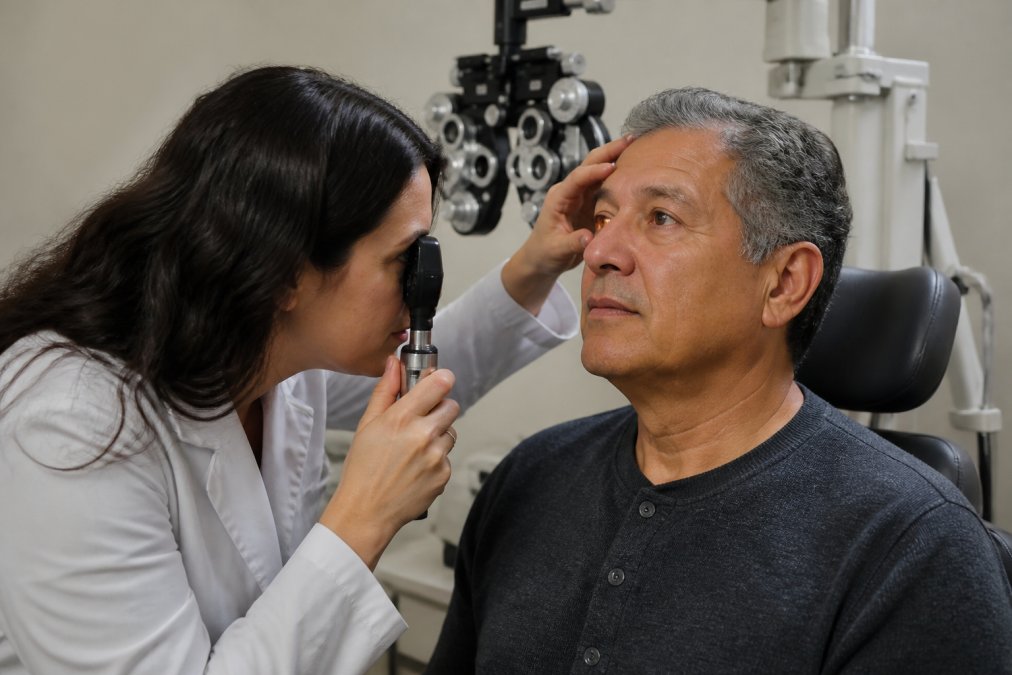
- Dilated fundus exam. Your ophthalmologist or optometrist examines the retina, optic nerve, and blood vessels directly.
- Retinal imaging. Fundus photography or tele-retinal imaging captures detailed pictures for comparison over time.
- Review and plan. You discuss findings and set your next screening date.
Dilation and Retinal Imaging
Dilating drops temporarily enlarge your pupils and typically blur near vision for four to six hours. Fundus photography gives your doctor a permanent record, so subtle changes are caught by comparing images year over year. Tele-retinal imaging, offered in some clinics, captures retinal photos that a specialist reviews remotely; it can improve access, but it does not replace a full dilated exam when findings are abnormal.
The Post-Exam Recovery Window
This is the part most guides skip, and it is the reason many patients dread the appointment. After dilation, your pupils cannot constrict, so bright light feels harsh and reading or texting is difficult. A common pattern is:
- First 1 to 2 hours: Maximum blur and light sensitivity. Near vision is unusable for most people.
- Hours 3 to 6: Blur fades gradually. Distance vision is usually fine; fine print is not.
- By the next morning: Most patients are back to normal.
Driving is the biggest practical concern. Many clinics advise against driving yourself home after dilation, especially if you are sensitive to glare or drive at night. Arrange a ride, use a rideshare, or ask the office whether a non-dilated screening is appropriate for your situation. Bring sunglasses even on a cloudy day, and consider a wide-brim hat for the walk to the car.
If you wear contact lenses, bring your glasses and a case; you may be asked to remove contacts before the exam. If you take eye drops for glaucoma or other conditions, ask whether to use them the morning of your visit.
Schedule your exam for a day when you don’t need to drive or read fine print. Book a late-afternoon slot if you can, so the blur wears off while you sleep. Bring sunglasses, a driver, and your glasses, and plan for a few hours of reduced near vision after your appointment.
Tele-Retinal Imaging vs. In-Person Dilation
Tele-retinal imaging is increasingly offered in primary care offices and pharmacies as a convenience screening. A camera captures retinal photos without dilating drops, and a remote specialist reads them. The trade-offs are real:
- Pros: No dilation, faster visit, no driving restriction, better access for patients in rural areas or with mobility limits.
- Cons: A narrower field of view than a dilated exam, so peripheral retinopathy can be missed. If the image is unreadable or shows anything abnormal, you will still be referred for a full dilated exam.
Think of tele-retinal imaging as a triage tool, not a replacement. If your only option is remote screening, use it, but do not treat a normal remote result as a substitute for the dilated exam your doctor recommends.
Diabetic Retinopathy Screening Guidelines You Should Know
Diabetic retinopathy screening guidelines set the minimum schedule, but individual factors can shorten or lengthen it. The American Diabetes Association’s Standards of Care recommends annual dilated exams for most patients, with less frequent screening permitted only when multiple normal exams and good glucose control are documented.
Your doctor may recommend more frequent exams if you have poorly controlled blood sugar, high blood pressure, kidney disease, or pregnancy. Conversely, a stable patient with years of normal results might move to exams every one to two years. Never self-adjust the interval; that decision belongs to your eye care team.
Skipping exams because your vision feels fine is the most common and most dangerous mistake. Retinopathy causes no symptoms until damage is significant, and vision lost to advanced disease often cannot be fully restored.
The Importance of Dilated Eye Exams for Diabetics
The importance of dilated eye exams for diabetics comes down to one fact: only dilation lets your doctor see the full retina. Undilated screenings can miss retinopathy in the periphery, where early damage often begins. A comprehensive dilated eye exam remains the standard of care because it detects problems that other tests overlook.
Conditions beyond retinopathy also appear more often in patients with diabetes, including cataracts and glaucoma. A dilated exam screens for all of these at once. This is preventative care in its truest form: finding and treating problems while they are still manageable.
For most patients with diabetes, an annual dilated eye exam is the single most effective step to prevent vision loss. It detects retinopathy, cataracts, and glaucoma before symptoms start.
Special Considerations: Pregnancy, Insurance, and Recovery
Two situations change the standard screening schedule more than any other: pregnancy and cost. Both are under-covered in most patient guides, and both are common reasons people fall off their exam schedule.
Pregnancy and Diabetic Eye Disease
Pregnancy accelerates diabetic retinopathy, sometimes dramatically. Rapid shifts in blood sugar, blood pressure, and hormone levels can worsen existing retinal damage or trigger new damage in a matter of weeks. This is why pregnancy is treated as a clinical exception to the annual schedule, not a reason to relax it.
For patients with pre-existing Type 1 or Type 2 diabetes, the common clinical approach is:
- Before conception or early in the first trimester: A comprehensive dilated eye exam to establish a baseline.
- Each trimester: Follow-up exams, because retinopathy can progress quickly between visits.
- For about a year after delivery: Continued monitoring, since some changes persist or worsen postpartum.
Gestational diabetes that develops during pregnancy is a separate situation. Most practitioners do not require routine dilated eye exams for gestational diabetes alone, because the condition is typically short-lived and the retina has not been exposed to years of high glucose. Ask your obstetrician and eye doctor whether screening is appropriate for you.
If you are planning a pregnancy and have diabetes, the best time to schedule an eye exam is before you conceive. Finding and treating retinopathy early protects both your vision and your pregnancy.
Insurance Coverage and Cost-Saving Tips
Diabetic eye exams are usually covered because screening is considered medically necessary, not routine vision care. That distinction matters: a “medical” exam is billed through your health insurance, while a “vision” exam is billed through a separate vision plan. Mixing them up is a common source of surprise bills.
A few practical points:
- Medicare Part B generally covers a dilated eye exam once every 12 months for patients with diabetes, and it may cover more often if you have symptoms or a documented change in condition.
- Most private plans follow the same annual standard for patients with diabetes, but you should confirm whether the exam is billed as medical or vision.
- Ask before you go. When you schedule, tell the office you have diabetes and ask how the visit will be coded. That single question prevents most billing surprises.
- If cost is a barrier, ask about payment plans, sliding-scale fees, or community screening events. Many clinics work with patients to keep essential screening within reach.
- Do not skip the exam to save money. The cost of treating advanced retinopathy, including injections and laser procedures, is far higher than the cost of annual screening.
Recovery After Dilation
Expect blurred near vision and light sensitivity for several hours after dilation, with most people returning to normal by the next morning. Do not drive until your vision clears, bring sunglasses, and plan a light schedule for the rest of the day. If your vision is still blurry the next morning or you notice new floaters, flashes, or a curtain over your vision, call your eye doctor right away.
Pregnancy, poorly controlled blood sugar, high blood pressure, and kidney disease all shorten the safe screening interval. If any of these apply to you, do not wait for your annual reminder. Call your eye doctor and ask whether you need to be seen sooner.
Conclusion
The challenge with diabetic eye disease is its silence: damage builds long before you notice it. If you live with diabetes, the most reliable way to protect your sight is a consistent screening schedule built around a comprehensive dilated eye exam. Clear Vision San Antonio provides expert ophthalmological care, combining advanced medical technology with a commitment to personalized patient attention. Our team of dedicated eye doctors offers a comprehensive range of services to help you achieve clear vision for life. We serve patients seeking the highest standards of eye health, ensuring each individual receives tailored solutions for their unique visual needs. Request an appointment with Clear Vision San Antonio and take control of your eye health before symptoms ever start.
Frequently Asked Questions
How often should a diabetic have their eyes checked?
Most adults with type 1 diabetes should have a comprehensive dilated eye exam within five years of diagnosis and then annually. Those with type 2 diabetes need an exam at diagnosis and yearly thereafter. If you have diabetic retinopathy or poor blood sugar control, your eye doctor may recommend more frequent visits. Always follow your eye doctor’s personalized schedule.
What is the 4-2-1 rule for diabetic retinopathy?
The 4-2-1 rule refers to signs of proliferative diabetic retinopathy: hemorrhages in four quadrants, venous beading in two or more quadrants, or intraretinal microvascular abnormalities in one or more quadrants. These findings indicate severe disease and often require prompt treatment. Your ophthalmologist looks for these during a dilated exam to determine if you need advanced care.
Why is a dilated eye exam necessary for diabetic patients?
Dilating drops widen your pupils so the doctor can see the retina, optic nerve, and blood vessels at the back of the eye. Early diabetic retinopathy often has no symptoms, and a dilated exam can detect changes before vision loss occurs. This allows for timely treatment and better outcomes. Non-dilated photos may miss early signs, so dilation remains the standard of care.
Can I have a diabetic eye exam without dilation?
Some clinics offer tele-retinal imaging, which takes pictures of the retina without dilating drops. It can be a convenient screening option, but it may not provide the same detailed view as a comprehensive dilated exam. If abnormalities are found, you will still need a dilated exam. Discuss with your eye doctor whether tele-retinal imaging is appropriate for you.